A technician replaces a damaged smartphone screen. The new display turns on, but some features are still not working. The screen fits properly, so what could be the problem?
On certain modern phones, replacing a component is only part of the repair. Some features need additional setup or calibration before they work as expected. Changes like these are making mobile repair more technical than before. If you're considering Mobile Repair Training in Guwahati, you'll need to learn more than how to replace damaged parts. Understanding how newer smartphones work is becoming an important part of repair training.
Replacing a damaged component may look simple, but newer smartphones can have specific repair requirements. For example, certain iPhone models require a calibration process after display or camera replacement. Even when the new component is installed correctly, some functions may not work as expected until the required repair procedure is completed.
A spare part that physically fits the device may fail to support certain functions.
Before fitting a replacement, technicians should check whether the part is suitable for that particular model. Some repairs also require special tools or procedures provided by the manufacturer.
Even a correctly installed spare part can cause problems if it isn't compatible with the device. Checking the model and repair requirements beforehand can help avoid unnecessary replacements and additional repair work.
Smartphone manufacturers are fitting more electronic components into smaller spaces. Some newer devices also use stacked motherboards, where separate board sections are connected together. These designs make certain electrical faults harder to locate.
Consider a smartphone that suddenly stops switching on. The battery may be fine, but there could be a problem somewhere in the power circuit.
How does a technician find the actual cause?
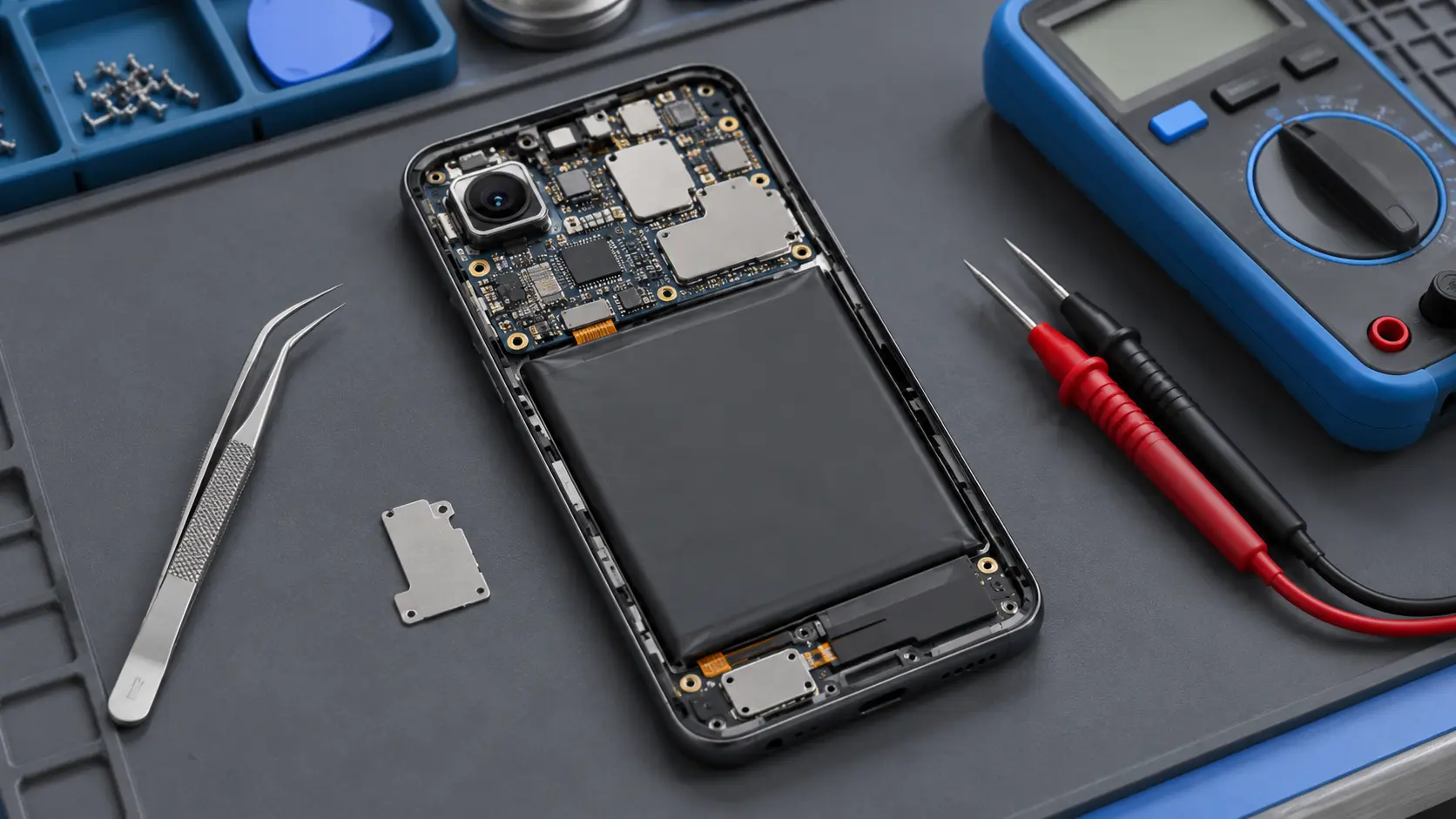
A DC power supply can help check how much current the motherboard draws. A multimeter is used to measure values such as voltage and resistance.
An unusually high current reading could indicate a possible short circuit or another electrical fault. However, the reading alone cannot identify the faulty component. The technician must examine the relevant circuit and carry out further tests. This is why circuit diagrams matter. They help technicians understand how electrical connections run through the motherboard.
Once the faulty area has been identified, the technician can decide whether micro-soldering or IC replacement is needed. Both procedures require the precision taught in advanced mobile repair training, as excessive heat or an incorrect repair attempt can damage nearby components.
Sometimes, a phone keeps restarting or gets stuck on the startup screen even though its hardware is not damaged. The issue could be related to system files, an unsuccessful software update or firmware. Firmware is the software that helps control the phone's hardware. Software troubleshooting is therefore an important part of Smartphone Repair Training in Guwahati, including procedures such as firmware flashing, which technicians may use to reinstall the device's firmware when necessary.
However, firmware flashing isn't the right solution for every startup problem. The technician must first identify the device model and determine whether the issue is software-related. Using incorrect firmware or following the wrong procedure can create additional problems and may result in data loss. Some smartphones also have security restrictions that limit certain software operations.
A phone that fails to start after an update may need software recovery, while a similar problem caused by damaged hardware requires a different repair. The symptoms can look alike, which is why checking the cause matters before attempting either procedure.
Watching a trainer repair a motherboard and doing the same work yourself are two different experiences. A demonstration can explain how a multimeter works, but identifying the correct testing points requires hands-on practice. Micro-soldering also requires steady handling because the electronic components are extremely small.
A useful training session gives students the opportunity to work through a repair problem with guidance.
For example, the trainer can provide a faulty motherboard and ask students to examine it. Instead of immediately showing the solution, the trainer can help them record observations and explain their findings.
As students become familiar with the equipment, they can gradually attempt more difficult tasks. Before choosing a Mobile Repairing Course in Guwahati, check whether the practical classes include:
Component identification: Learning the names and functions of important motherboard parts.
Circuit reading: Understanding how electrical connections are arranged.
Diagnostic testing: Using suitable equipment to identify possible faults.
Micro-soldering: Practising precise work on small electronic components.
Safe repair methods: Handling devices properly during repair work.
It's also worth asking how much time you'll spend working with actual devices rather than only watching demonstrations.
Having advanced repair tools doesn't mean every damaged phone can be repaired successfully. A broken connection on an accessible part of a motherboard may be repairable. However, severe damage inside a multi-layer board can make the repair much more difficult. Before attempting such work, a technician should consider the condition of the device and the risk of causing further damage.
There's another important responsibility after completing a repair.
Imagine a phone that switches on after its motherboard has been repaired. That doesn't always mean the original problem has been fully resolved. The technician should check whether the affected functions are operating correctly before returning the device.
If the problem remains or another fault is found during testing, the customer should be informed before further work is carried out. This helps avoid unnecessary repairs and gives the customer a clear understanding of the device's condition.
Smartphone repair is becoming more specialised as devices introduce new hardware designs, software requirements and component technologies. For students entering the field, understanding these changes can help them develop practical skills and approach repair problems with greater confidence.
If you're looking for an institute offering chip-level mobile repair training institutes in Guwahati, check whether its courses combine technical knowledge with hands-on practice.
At The Keypad, students can explore mobile hardware and software repair, including chip-level techniques and practical fault diagnosis.
Interested in learning modern mobile repair techniques?
Explore The Keypad's mobile repair training programme in Assam and learn more about its practical classes.